
We like to believe addiction is something that happens later. A wrong turn. A bad crowd. A series of decisions that, if made differently, would have led somewhere else entirely. It’s a comforting narrative because it suggests control. It suggests distance. It suggests that “those people” are fundamentally different.
But that version doesn’t hold up under a closer look. For some of us, the blueprint is laid down much earlier. Not in a way that guarantees addiction, but in a way that makes us far more responsive to it. More sensitive to reward. More vulnerable to anything that offers fast relief, fast pleasure, fast escape.
I didn’t start with drugs. I started with food.
As a kid, I was severely overweight. Food wasn’t just something I enjoyed, it was something I relied on. It gave me an immediate shift in how I felt. Stress, boredom, loneliness, it all softened with a single meal. And not just any meal. It was the most caloric, most rewarding version I could get my hands on. After work as a teenager, it became routine to swing through a drive thru, order something like a triple bacon cheeseburger, go home late at night, eat, and go straight to bed.
At the time, it didn’t register as addiction. It just felt normal. It felt like habit. But looking back, it followed the same pattern you see in any dependency. There was a trigger, there was a behavior, and there was a reward. And over time, that loop got stronger.
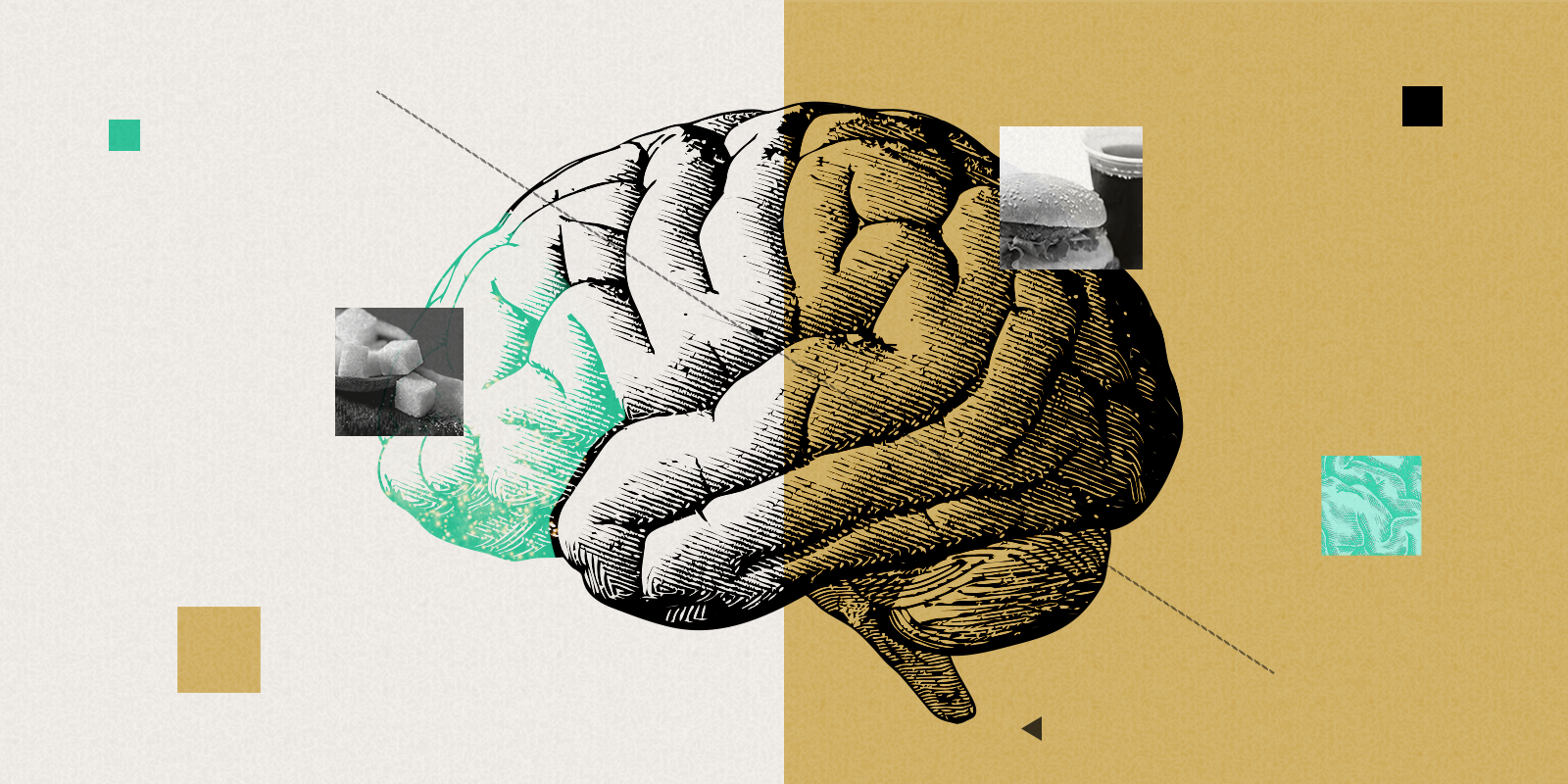
Science has a clearer way of describing what was happening. The brain’s reward system, largely driven by dopamine, is designed to reinforce behaviors that keep us alive. Eating is one of those behaviors. But when the stimulus is intense enough, highly processed, calorie dense foods engineered for maximum palatability, that system can become overstimulated. Studies in neuroscience have shown that these foods can activate reward pathways in ways that closely resemble addictive substances, reinforcing compulsive patterns rather than simple hunger.
When you grow up in that loop, you don’t just gain weight. You train your brain to expect relief from something external. You learn, early, that discomfort can be fixed quickly. That lesson sticks.
Breaking it was one of the hardest things I had done up to that point. In college, I made the decision to change. I started dieting, lowered my caloric intake, forced myself into new routines. On paper, it sounds straightforward. In reality, it felt like withdrawal.
There was irritability, restlessness, constant mental negotiation. Hunger didn’t just feel physical, it felt psychological. Like something was missing. It took a level of discipline that bordered on obsession. Exercise, strict control, repetition. Over time, the weight came off, and I built a different structure around my life. From the outside, it looked like a success story.
But the underlying wiring hadn’t changed as much as I thought.
Years later, that same reward system found something stronger.
Methamphetamine didn’t need an introduction. It didn’t need a learning curve. It fit into a system that was already primed for it. Where food once provided relief, this provided something more immediate, more intense, more consuming. The reinforcement was faster. The pull was stronger.
What started as occasional use didn’t stay that way. It escalated, like it tends to. The brain adapts quickly to powerful stimuli, and what once feels intense becomes baseline. Then the cycle shifts. You’re no longer using to feel good. You’re using to feel normal.
That’s where the loss of control actually happens.
Research backs up what that experience feels like from the inside. Repeated exposure to high dopamine spikes, whether from substances or behaviors, can reduce the brain’s natural sensitivity to reward. This is often referred to as downregulation. Over time, everyday experiences lose their impact. Motivation drops. Pleasure flattens. The substance, or behavior, becomes less about enhancement and more about maintenance.
For me, it became a full time state. Daily use turned into all day use. And it stayed that way for years.
What made it more complicated was that, on the surface, things still looked intact. I was high functioning. I maintained a career. I didn’t collapse financially. Most people around me had no idea what was happening. That version of addiction is easy to misunderstand because it doesn’t match the stereotype. There’s no immediate external collapse, so it’s easier to justify, easier to hide, easier to continue.
But functioning isn’t the same as being in control. It just means the consequences haven’t fully surfaced yet.
The hardest part of overcoming it wasn’t just stopping the substance. It was recalibrating everything that came with it. The brain doesn’t immediately reset. There’s a period where nothing feels right. Energy drops. Mood swings. A kind of emotional flatness that makes it difficult to find satisfaction in anything. It’s not just physical withdrawal, it’s neurological adjustment.
That process can take time, and it’s one of the reasons relapse is so common. When your baseline has been altered, returning to it doesn’t feel like relief. It feels like loss.
This is where the idea of being “programmed” needs to be understood carefully. It’s not destiny. It’s not a fixed outcome. But it is a predisposition. Early patterns, especially those tied to reward and coping, shape how we respond to opportunities for reinforcement later in life.
Some people can engage with substances or behaviors and walk away without much difficulty. Others can’t. Not because they lack discipline or character, but because their starting point is different. Their sensitivity is different. Their reinforcement loops lock in faster and hold on longer.
That difference matters.
It shifts the conversation away from simple labels like “addict” and toward something more accurate. A spectrum of susceptibility. A range of responses to the same stimuli.
It also highlights something that often gets overlooked. The substance itself is only part of the equation. The environment, the culture, and the early conditioning all play a role in determining how that substance interacts with a person.
In spaces where high stimulation is normalized, whether that’s through food, nightlife, sex, or drugs, those vulnerabilities can be amplified. What feels like participation can quietly become dependence.
The question, then, isn’t just whether something is addictive. It’s whether you are primed to respond to it in a way that makes stopping difficult once you start.
For me, that pattern started early. It showed up in food long before it showed up in drugs. And by the time I recognized it fully, it had already shaped the way my brain pursued relief, reward, and escape.
Understanding that doesn’t erase the past. But it does clarify it.
And more importantly, it changes how you approach the future.