
If you’ve ever been an addict spending time with other addicts, you start to notice a kind of social logic that doesn’t quite line up with reality or common sense. There’s often a shared sense of victimhood or a deflection of accountability, and stories tend to come layered with just enough distortion to make you question what’s real. Conversations can feel surreal, as if everyone is operating in a slightly different version of the world, and by the end you’re left mentally drained from trying to follow the narrative.
What stood out to me most in those environments was how rare it felt for anyone to openly admit they were addicted. I often felt like the only one willing to say it plainly. Around me, people would insist, almost reflexively, “I could quit tomorrow if I wanted to, I’m not an addict.” Internally, it was hard not to notice the contradiction. The same person who claimed total control might struggle to go even a short stretch without using, or spiral into anxiety if their plug (dealer) didn’t text them back within an hour. The disconnect between what was said and what was happening was striking.
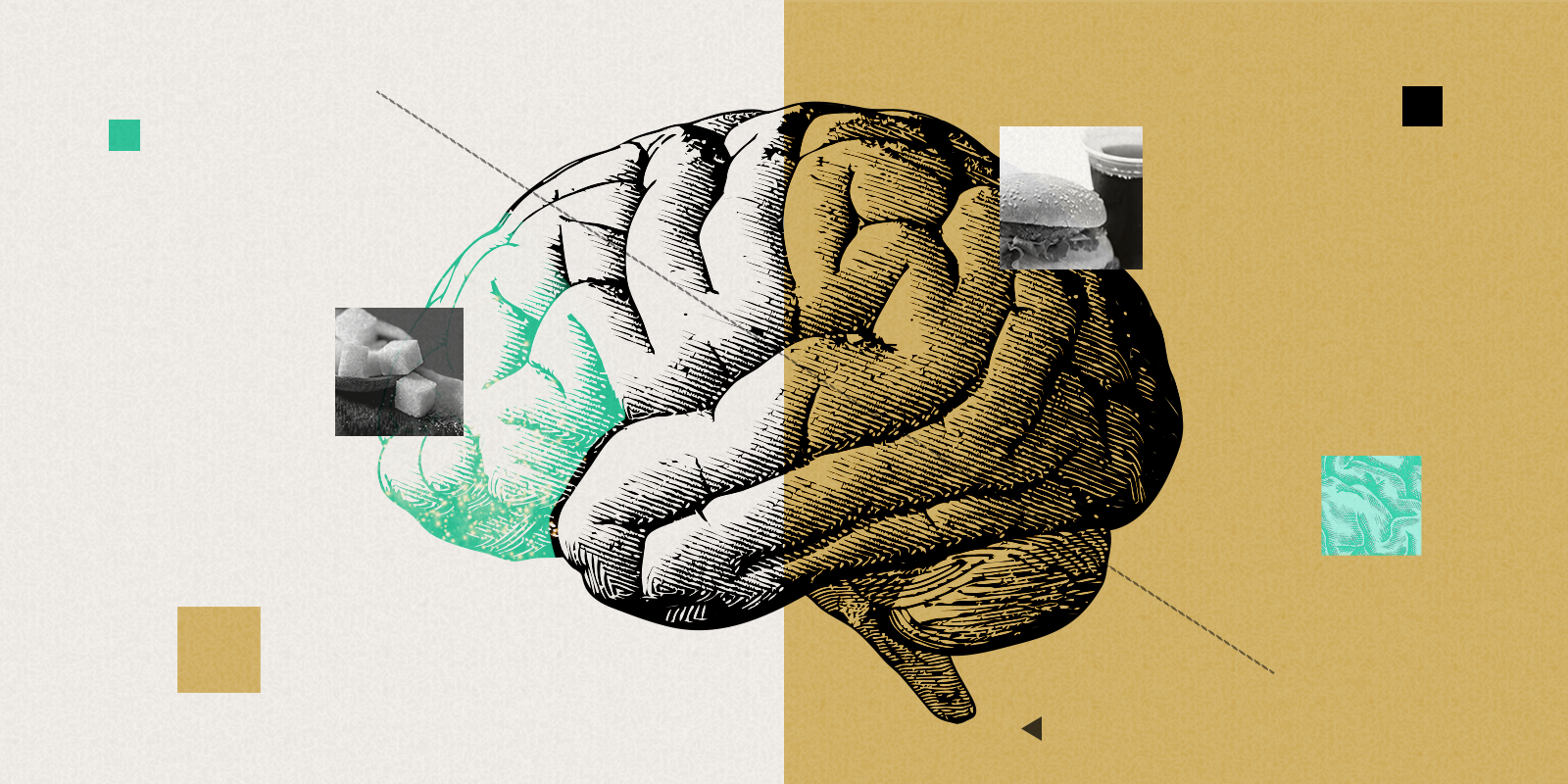
So why is it so difficult for many people to acknowledge an addiction? Part of the answer lies in the way substances like methamphetamine affect the brain. Over time, the drug reshapes the reward system, making its use feel essential rather than optional. In that state, the brain begins to minimize risks and inflate a person’s sense of control, which helps explain why confidence in the ability to quit can actually increase even as real control diminishes.
There’s also a powerful psychological tendency toward optimism bias, the belief that one is the exception. If someone has managed to stop for a few days, or only uses in specific contexts, that becomes evidence, in their mind, that they are still in control, even if the broader pattern tells a different story. Alongside this, people often redefine what “addiction” means by comparing themselves to more extreme cases. As long as they aren’t using constantly, or as long as they can point to some area of life that still functions, they conclude they don’t fit the label.
Admitting addiction also carries a heavy emotional weight. It forces a confrontation with shame, stigma, and the possibility that change is necessary. For many, it’s easier, at least in the short term, to maintain a narrative of control than to face what that admission might require. The environment plays a role as well. When substance use is normalized within a social or dating circle, it reinforces the idea that everything is fine. If everyone around you is engaging in similar behavior, it becomes much harder to recognize it as a problem.
What emerges can feel like an “imaginary world,” but it’s really a convergence of denial, distorted thinking, and reinforcement from both the drug and the surrounding environment. It’s frustrating to witness, particularly when you care about the people involved, because logic alone rarely breaks through. Directly confronting someone by insisting they’re addicted often leads to defensiveness rather than reflection. Change tends to happen only when a person begins to see consequences they can no longer ignore. In the meantime, what can sometimes be more effective is not confrontation but curiosity, asking questions that gently challenge the narrative and invite a moment of honesty.
Statistically, denial and lack of insight are common features of substance use disorders. Many individuals don’t seek help until external pressures mount, such as legal issues, health complications, financial strain, or relationship breakdowns. Even then, the initial motivation is often to relieve the consequence rather than address the underlying pattern. It’s only later, sometimes much later, that deeper recognition begins to take hold.
What complicates things further is that from the outside, it’s easy to reduce all of this to poor choices or lack of willpower. But from the inside, it doesn’t feel that simple. The distorted logic feels coherent. The justifications feel reasonable. And when you’re surrounded by others reinforcing the same worldview, it gains even more credibility. That’s why people can stay in these environments far longer than they ever expected. They’re not just battling a substance, they’re embedded in a system of thinking that constantly revalidates itself.
This is also why moments of separation, whether physical distance, new environments, or exposure to different perspectives, can be so powerful. When someone steps outside of that echo chamber, even briefly, the contrast can be jarring. Things that once felt normal start to look different. Patterns become more visible. It doesn’t automatically lead to change, but it creates the conditions where change becomes possible.
Ultimately, the shift tends to begin not with being told the truth, but with seeing it clearly, personally, and in a way that can’t easily be rationalized away. That might come from a consequence, a relationship, a moment of self recognition, or simply exhaustion from maintaining the narrative. And when that happens, the same social dynamics that once reinforced denial can start to feel suffocating instead of comforting.
Until then, the “imaginary world” persists, not because people are unintelligent or unwilling, but because the combination of neurochemistry, psychology, and environment makes it incredibly effective at sustaining itself. Understanding that doesn’t make it any less difficult to witness, but it does offer a clearer lens for approaching it, with less frustration, and maybe a bit more precision in how we respond.
Another strange part of this is how you can be deeper in it than everyone else, but still see things more clearly.
You might be using more, taking bigger risks, going further than the people around you, and yet when you listen to them talk, it’s obvious they’re not being honest with themselves. They’ll say things like, “I can stop whenever I want,” or “I’m not that bad,” and you can immediately see that it’s not true. Not because you’re judging them, but because you’ve already been there, or gone past it.
Sometimes when you’ve crossed certain lines, you stop being able to lie to yourself the same way. You already know what it looks like when things are out of control, because you’ve lived it. So when someone else is still trying to convince themselves they’re fine, it stands out.
Meanwhile, someone who isn’t as deep in it might actually be more in denial. They still have just enough going for them, a job, some routine, things that haven’t completely fallen apart, so they use that as proof that everything’s okay. And because of that, they hold onto that belief even harder.
So you end up in this weird place where you’re worse off in reality, but more honest about it. And they might be doing “better” on the surface, but more disconnected from what’s actually going on. That doesn’t make you any less addicted, though. Seeing it clearly doesn’t mean you can stop. If anything, it can make it more frustrating. You know exactly what’s happening, you can see where it leads, and you still keep going.
It also makes being around it harder. The conversations start to feel repetitive. The same excuses, the same patterns, over and over. You start to feel like you’re sitting in a room where everyone’s pretending not to notice what’s right in front of them. But that awareness matters. Even if it doesn’t change things right away, it sticks with you. Once you’ve really seen it for what it is, it’s hard to fully go back to believing the story that everything’s fine.
Here is the most important take away from this article. If you remember anything, I hope it is this part.
Being able to acknowledge that you’re an addict matters because it shifts you from reacting to things blindly to actually seeing what’s going on. That doesn’t fix everything overnight, but it changes the direction you’re moving in.
First, it cuts through the mental back-and-forth. When you’re not calling it what it is, you spend a lot of energy justifying, minimizing, or comparing yourself to other people. Once you say, “this is a problem,” you don’t have to keep defending it. That alone can be a huge relief.
It also gives you back some control, even if it doesn’t feel like it at first. Denial makes it seem like things are just happening to you, like you’re stuck in a loop you can’t quite explain. Acknowledging it puts a name to the pattern. When you can see the pattern, you have a chance to interrupt it, even in small ways.
It makes honesty possible, too. Not just with other people, but with yourself. You start noticing triggers, habits, and consequences without filtering them. That kind of awareness is what eventually leads to change. Without it, everything stays vague and easy to ignore.
Another big piece is that it opens the door to support. Whether that’s friends, recovery groups, therapy, or even just one honest conversation, none of that really works if you’re still telling yourself nothing is wrong. People can’t meet you where you are if you’re not willing to stand there.
It also reduces the gap between what you say and what you experience. That gap is exhausting. When you’re claiming control but feeling out of control, it creates constant tension. Owning it doesn’t make it easy, but it makes it real. And real is something you can actually work with.
And maybe most importantly, it plants a seed. Even if you’re not ready to stop, even if nothing changes right away, once you’ve admitted it, it’s hard to fully go back to pretending. That awareness sticks. Over time, it builds, and for a lot of people, that’s what eventually leads to doing something different.
So it’s not about labeling yourself just for the sake of it. It’s about clarity. And clarity is usually the first step toward anything getting better.